
New American Stone Mills
A digital flagship for an analog craft
UX heuristics, research, redesigned website storytelling, rewritten manuals, and hands-on stewardship with builders who live for stone-milled grains.
Web UX · Technical writing · Brand systems
TL;DR
- Sole UX: heuristics, research, site flow and storytelling, manuals, photography, SEO, and a role that grew into merchandise, partner linking, and customer-contact automation - working directly with the owner.
- Stakeholder pain (demand vs. capacity, reactive service, dated copy, lead quality, bot calls) and user confusion overlapped; clearer hierarchy and flows reduced friction for both sides.
- Live iteration with Hotjar and analytics showed nonlinear journeys - separate mill model pages and plain-language manuals clarified intent for a wide range of technical comfort levels.
- 820+ Prospect contacts studied Mined for themes feeding IA, forms, FAQs, and manuals.
- 7 Repeated question themes Plus one unforgettable question about milling bananas - really.
- Solo UX Web + manuals + beyond Stakeholder, CX, imagery, merchandise, social coordination.
Becoming a student of the grind
New American Stone Mills hired me to run UX heuristics, user research, best practices, and update content for their website. The goal was twofold: improve user flow and storytelling on the site and give stakeholders a stronger marketing tool and database.
I was the sole UX team member - initially updating site media and UX/UI elements, editing content, retelling the company story, and aligning the site with where the business had been and where it was going. I reworked installation and service manuals for clarity and usability and shot new photographs to match instructions. I worked directly with the owner as lead stakeholder and coordinated with their social media manager on imagery and messages.
My role grew into SEO, promotional merchandise, linking partner businesses, streamlining customer care and marketing, and automation around customer contact - always anchored in what we were learning from real people using the site.
Stakeholder pain points
- Potential customers turned away due to high demand and slow order fulfillment - it takes time to make these mills.
- Customer service tended to be reactive rather than proactive.
- Site copy lagged the current product and needed serious updating.
- Maintenance packages were not pitched with a sharp enough value proposition.
- Time on sales and service ate time that could go to product development and manufacturing.
- The site needed to better differentiate serious prospects from casual browsers.
- “Bot” calls from online number scrapers needed to stop.
The primary audience was potential mill users - often owners of artisan bakeries - but as I researched, it became clear people arrived for many reasons. Pain points for stakeholders and for users intersected in both the site and the manuals; fixing information hierarchy and flow unpacked clarity, time savings, and stronger brand expression.
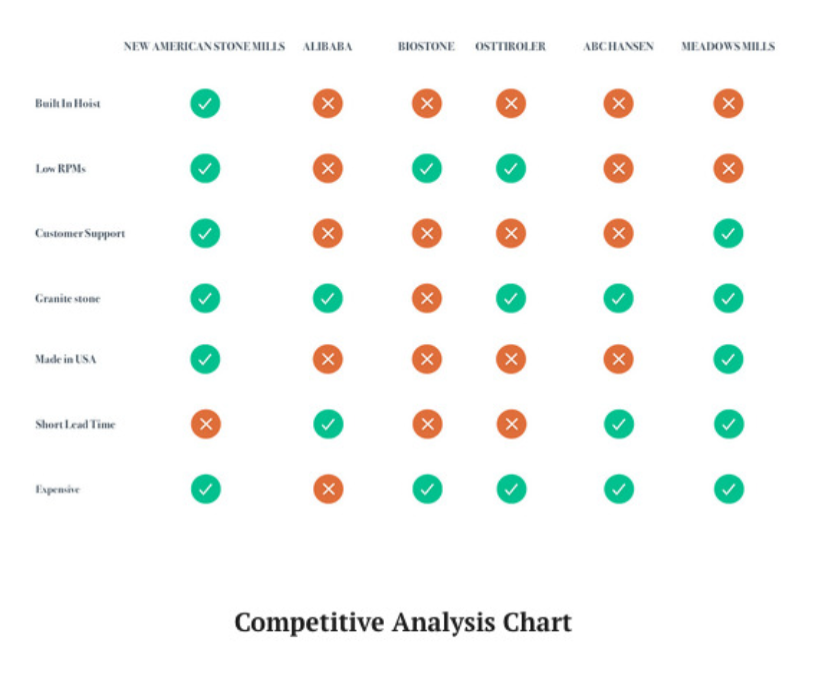
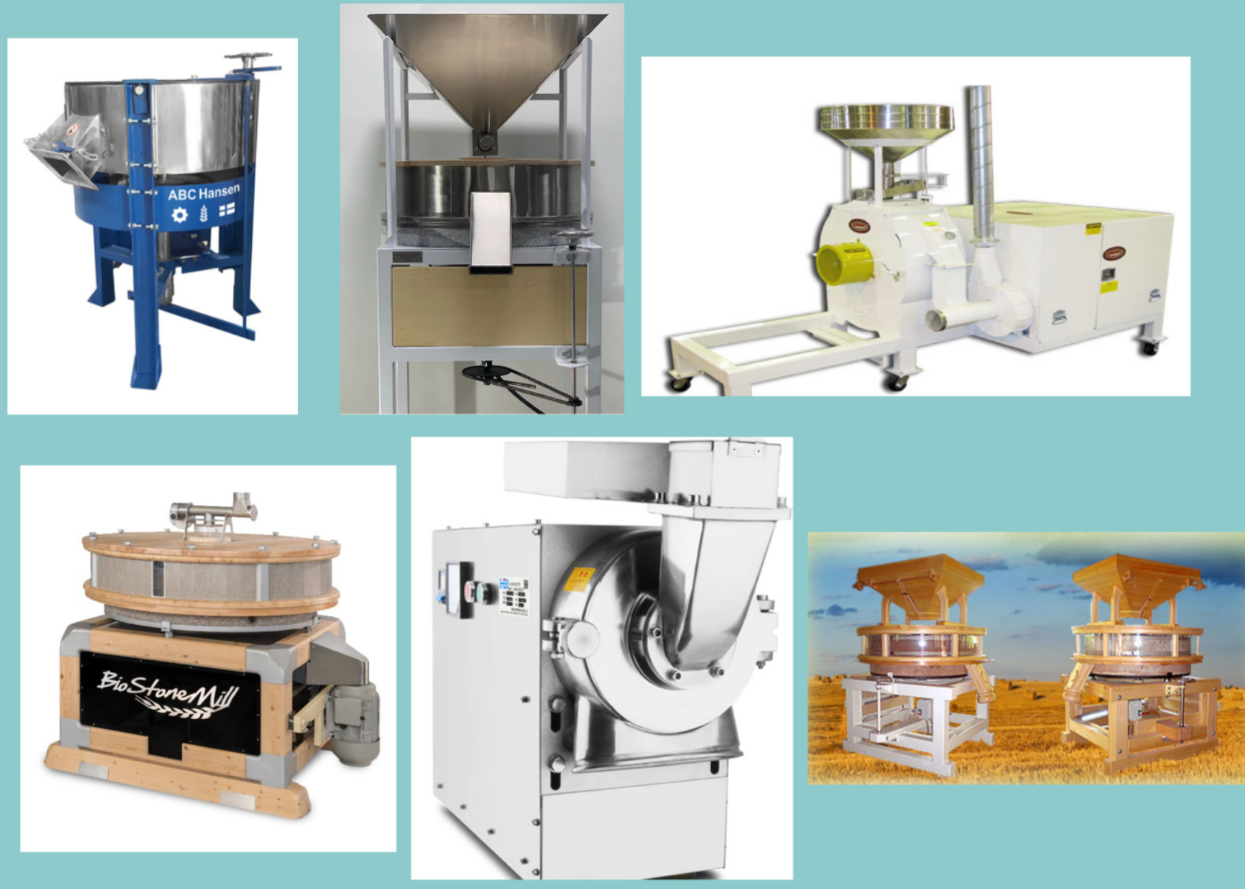
Competitive analysis and research
Custom grain mills live in a niche that still has real competition and opportunity. Research quickly showed New American Stone Mills enjoys a diehard community of happy customers - the kind of devotion that can fuel brand ambassadorship if you open clearer lines of communication.
I studied current mill owners, prospect intake forms, and the competitive set to understand questions, anxieties, and purchasing patterns. 820+ prospective customer contacts surfaced seven common themes (and yes - one was about milling bananas).
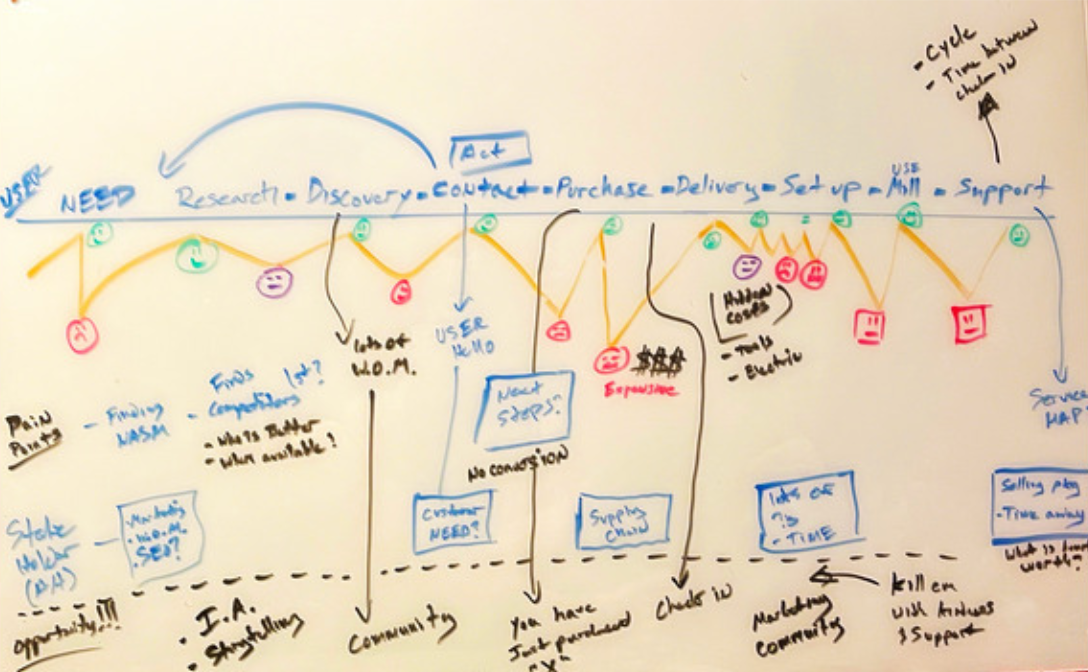
User journey
Journey mapping helped clarify the cycle and needs of future versus existing customers alongside the business’s operational reality. User goals were varied but often pointed to a familiar human desire - autonomy over process, ingredients, and craft.
Wireframes
Wireframes started on paper or in Balsamiq. They doubled as alignment tools: sharpening story and IA before anything hit production - and gave the stakeholder something concrete to react to quickly. Once we had alignment, I mocked changes on the live site so we could learn from real behavior instead of only meeting-room opinions.
Iteration and live testing
I was fortunate to test on a live site with continuous iteration. Hotjar and analytics showed how people actually moved: journeys were nonlinear and repetitive. A typical path looped from a request form back to mill pages, FAQs, or About - re-reading, re-scrolling - before returning to submit.
Reviewing form data, analytics, and screen interactions, we saw that most users already had a strong idea of which product interested them. We introduced separate pages for each mill model so people could focus on one product line without wading through everything else first.
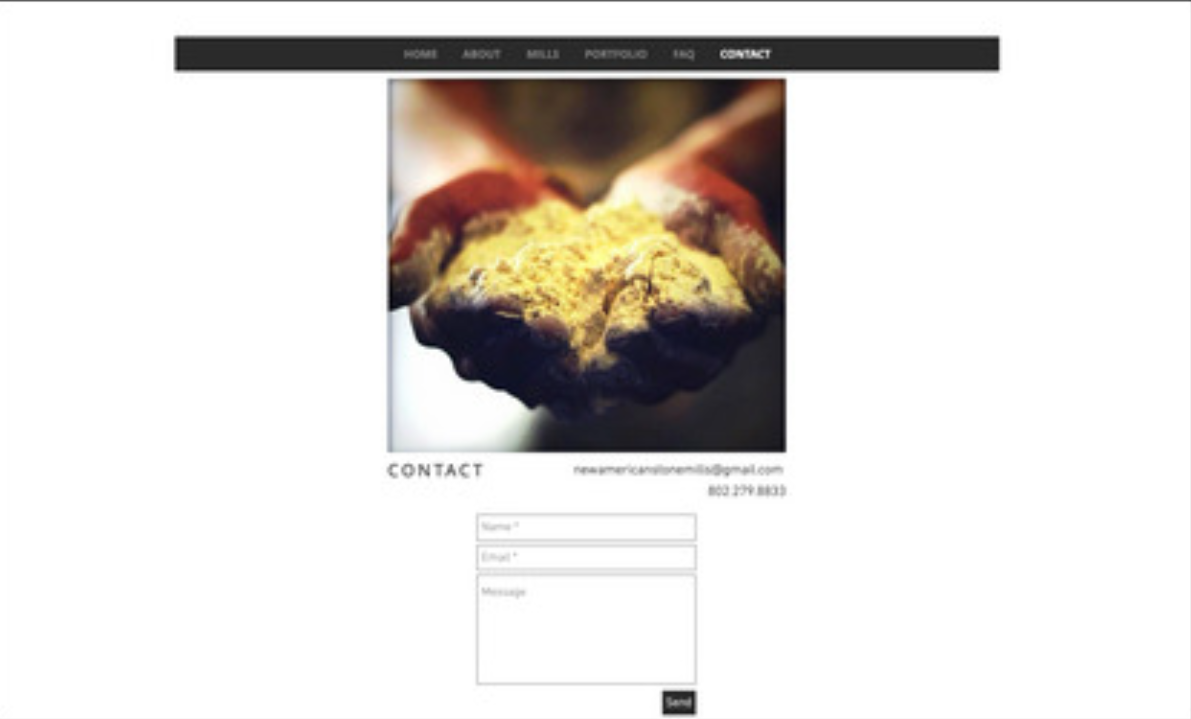
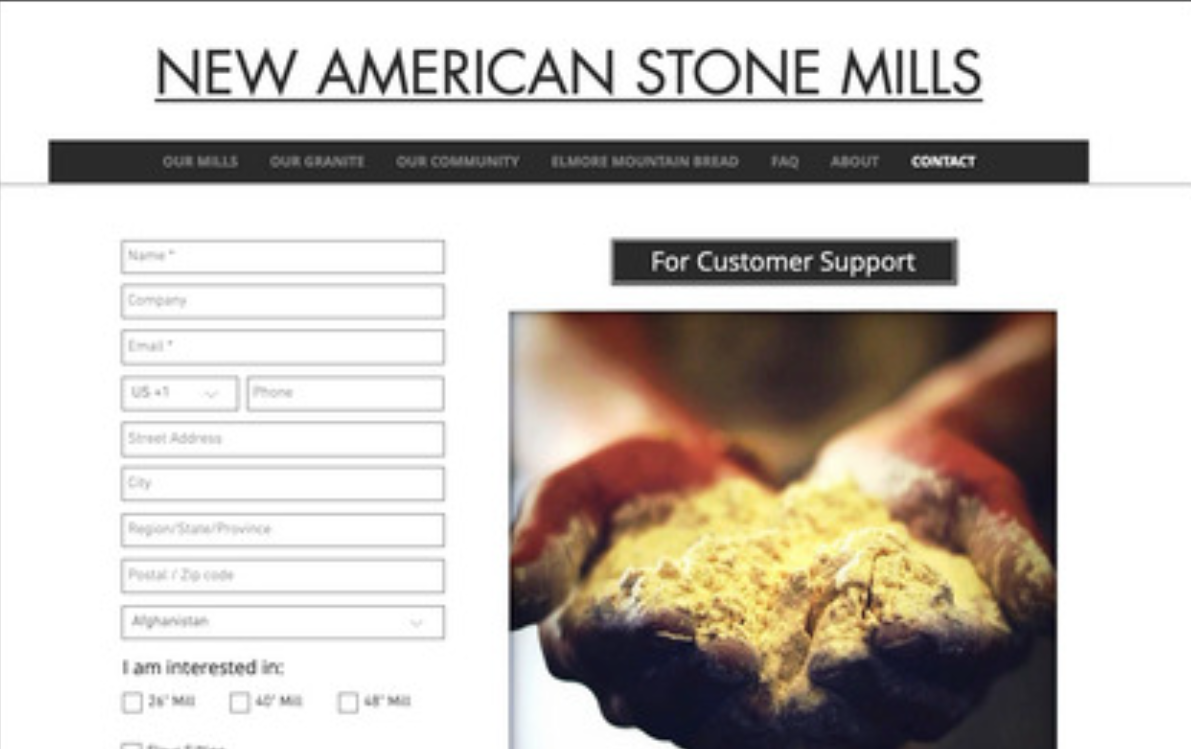
Below: prospect intake before we tightened qualification and routing, beside the after state once mill-focused paths and clearer fields shipped.
Mill manuals - assume nothing
Manual work pulled me from digital into physical documentation. Installation and service guides had to serve mill owners across skill levels and life experiences - including readers with little formal technical vocabulary.
Plain language and more than one modality (words, numbering, visuals) wherever possible reduced failure modes during install and upkeep. Rewriting manuals became parallel work with verbal identity: how NASM speaks when things are frustrating, fragile, or high-stakes.
Brand is everything we do. With NASM, a UX-led cleanup turned into strengthening a customer community and clarifying how the enterprise presents itself. The owner and I chipped away at the same knots - user friction on the page and brand voice on the page - until both felt intentional.
I’m glad you are here and that you are on board.
Andrew Heyn, owner, New American Stone Mills